
Winsor McCay (1918) The Sinking of the Lusitania- Original Vintage Production Art
The Sinking of the Lusitania is a war propaganda film created in 1918 by American cartoonist and animator Winsor McCay. The film presents a dramatized account of the events leading to the sinking of the RMS Lusitania in 1915, a civilian ocean liner torpedoed by a German U-boat. The attack resulted in significant loss of civilian life and played a major role in shaping public opinion, ultimately contributing to the United States’ entry into World War I in 1917.
The sinking of the Lusitania marked not only the destruction of one of the largest passenger ships of its time, but also one of the deadliest enemy attacks on civilians during the war. Of the 1,959 passengers and crew aboard, 1,198 lost their lives. McCay’s film was intended to elicit a strong anti-German response from the American public and to support the United States’ war efforts through visual storytelling.
From an animation history standpoint, the film is exceptionally important. It is one of the earliest known surviving animated films to utilize transparent celluloid animation techniques. A notable predecessor to McCay’s use of celluloid was John Randolph Bray’s 1913 animated film The Artist’s Dream (also known as The Dachshund and the Sausage), which helped lay the groundwork for the animation methods McCay later refined.
For further historical context on the RMS Lusitania and Winsor McCay’s film, please see History of McCay’s The Sinking of the Lusitania.
All pieces presented here are original vintage production cels from Winsor McCay’s 1918 World War I propaganda film The Sinking of the Lusitania. There are no reproductions, limited editions, or sericels. All artwork is 100% original production material.
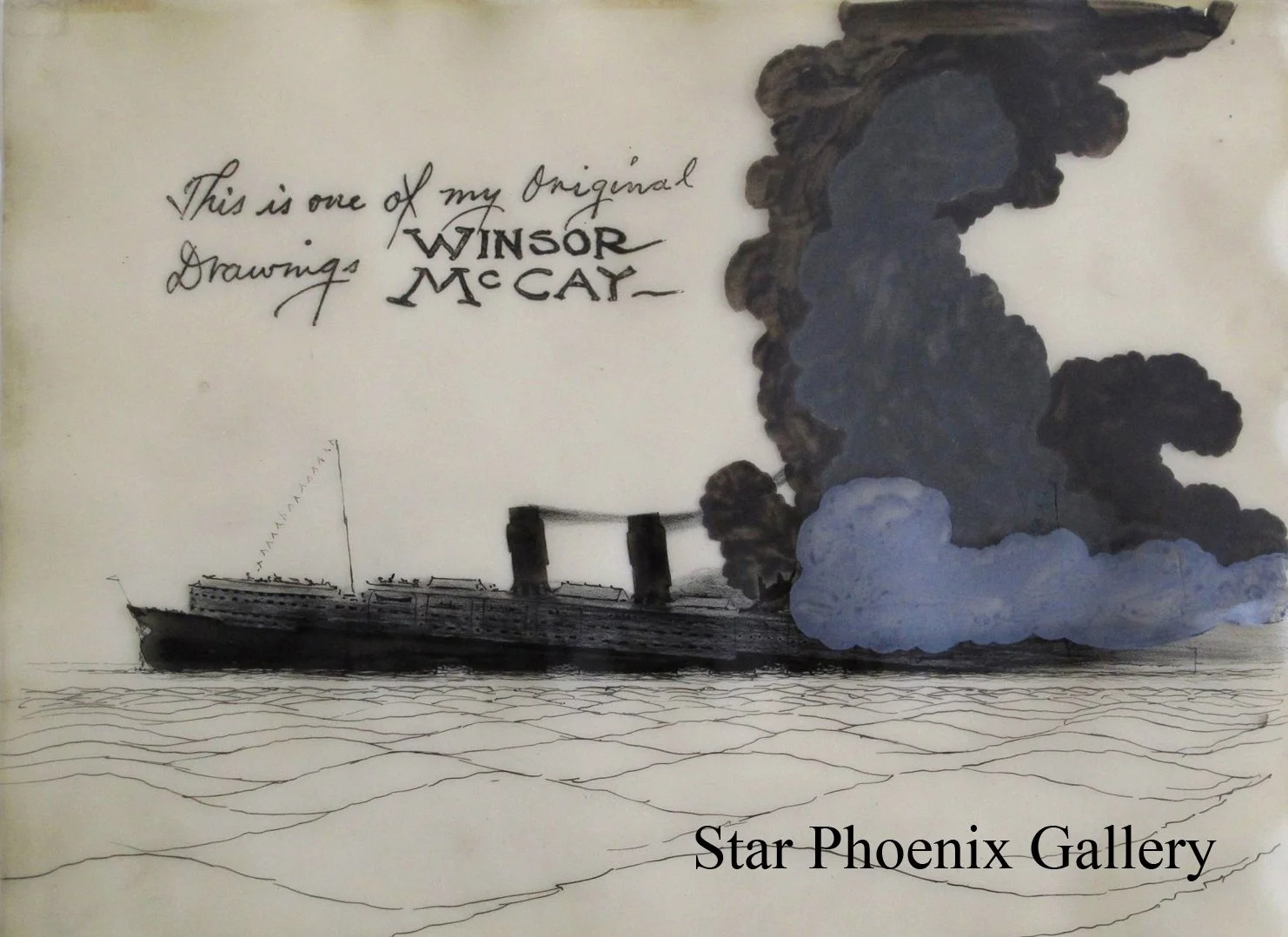
Original 1918 Winsor McCay Cel - The Sinking of the RMS Lusitania WWI Propaganda Film